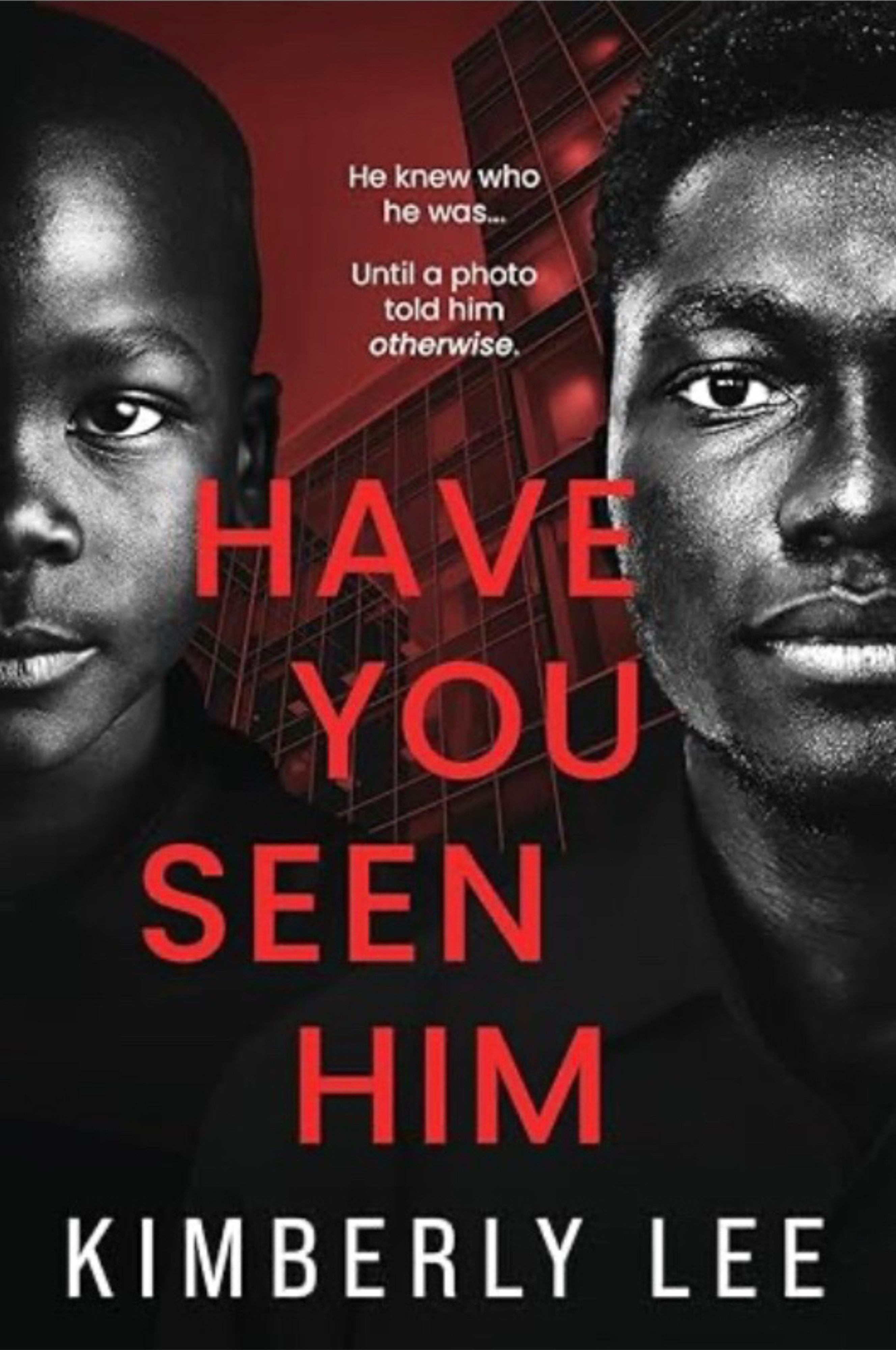
What if everything you believed about yourself was totally wrong?
For David Byrdsong, life is a series of daily obligations. An attorney, he lacks both ambition and the ability to commit to a long-term relationship with his girlfriend, Gayle. Abandoned by his family at an airport when he was eleven, he learned to blunt his feelings, despite his subsequent adoption by a loving couple.
Until one day, when David discovers his own face in a missing child ad. Suddenly driven to uncover the truth about his past, he is forced to tap into his inner strength as he encounters corporate conspiracies, murdered bystanders, and distressing suspicions about the only family he’s ever really trusted. David enlists Gayle's help—and the help of an unlikely stranger with secrets of his own—as he attempts to find his true family, whoever they are.
Have You Seen Him is a story of lost identity, dangerous secrets, and a deeply personal pursuit of the truth.
Praise for Have You Seen Him:
Next Gen Indie Gold Award winner and IBPA Silver Award winner, Have You Seen Him has earned praise from readers and reviewers alike.
"Lee debuts with a dazzling maze of courtrooms, kidnappers, and unsolved mysteries in this substantive thriller, boasting a rich ensemble cast.…Have You Seen Him is consistently sincere, never losing sight of its spirit, and always ensuring readers are both challenged and charmed right up to the final page." ~ BookLife
"…a slow-burning, emotional thriller that explores identity, trust, and the ripple effects of secrets long buried….This is a debut worth reading!" ~ Natasha Reed
"I loved the numerous reveals, and some made me gasp out loud! I won’t give any spoilers, so I won’t ruin it for you. If you love to be kept guessing until the end…give this book a try." ~ Julie Kodama
"…delivers enough action to trigger a fight-or-flight response. The sparse touch heightens suspicion, palpable dread, and tension, fueling the overall pace….[E]veryone will stay engaged." ~ C. Elyse, A Sip, A Shout Out, and a Sentence
"Cleverly written and thoughtfully crafted, Lee’s debut is action-packed and entertaining with enough emotion and depth to hook you. Gayle was my favorite character—she kicks ass." ~ Mystery Manon, The Cluesletter
"…an impressively engaging, cleverly scripted, and simply riveting read from start to finish. Especially recommended for fans of unique suspense thrillers…." ~ Midwest Review
"The plot contains action, mystery, murder, secrets, and lies. There’s potential here for a sequel, and I’ll be one of the first in line to read it." ~ Stephen Christopher, Readers’ Favorite
"The action and the mystery kept me reading. I had to know why he was missing." ~ Briana Fitzpatrick
"This book was one that definitely pulled me in as twists and turns unravelled. Overall it was a twisty search for truth, tangled in corporate secrets, buried trauma, and family drama." ~ A.D.
"I really enjoyed the author’s style of writing, the chapters were short and to the point and even though the storyline was intricate and multi-dimensional, it all came together." ~ Jameelah Deleon
Kimberly Lee, JD, is a versatile writer, workshop facilitator, and editor with a passion for nurturing the imaginative spirit and helping others reveal their creative gifts. Kimberly holds degrees from Stanford University and UC Davis School of Law, along with certifications from Amherst Writers & Artists, SoulCollage®, Guided Autobiography, and the Center for Journal Therapy. Recent collaborations include Esalen Institute, Omega Institute, Hollyhock Retreat Center, and The Huntington. Kimberly’s stories and essays have appeared in numerous publications and anthologies, and she has served on the staffs of Literary Mama, F(r)iction, and Carve magazines. She lives in Southern California with her husband and three children.
I cannot imagine what David must have gone through. Seeing his own picture? Wondering about his past? Questioning my identity and everything that I thought I knew about myself? Those questions are what drew me into this book. I was not sure about the multiple POVs, but I started to think about each character and their feelings. Especially as I read their point of views. This was a fast paced book. The secrets unravel and bodies pile up. I did have to reread some parts to figure out whose POV it was, and to pick up some of the clues. However the twists and turns were worth it. I started to guess something, only to be wrong, The tension grew, innocents were hurt and mercenaries added to the drama. I did think that the ending was too clean. The author tied up the story like a present to the reader, and I feel like I am missing something. That makes me think that there will be a book 2. There are real lifelike characters, and I found myself relating to them, especially when one was following an instructor on how to roast a chicken. For me, this book was about love, the love of parents who would do anything for their child. Thanks to this book I have been singing "Groove is in the Heart" for days.. Which is not a bad thing. I am giving this book a 4/5. I was given a copy, however all opinions are my own! Definitely a new author to follow!
Tour Participants:
Click through the other tour stops for can’t-miss reviews, insider interviews, exclusive guest posts, and more chances to win!
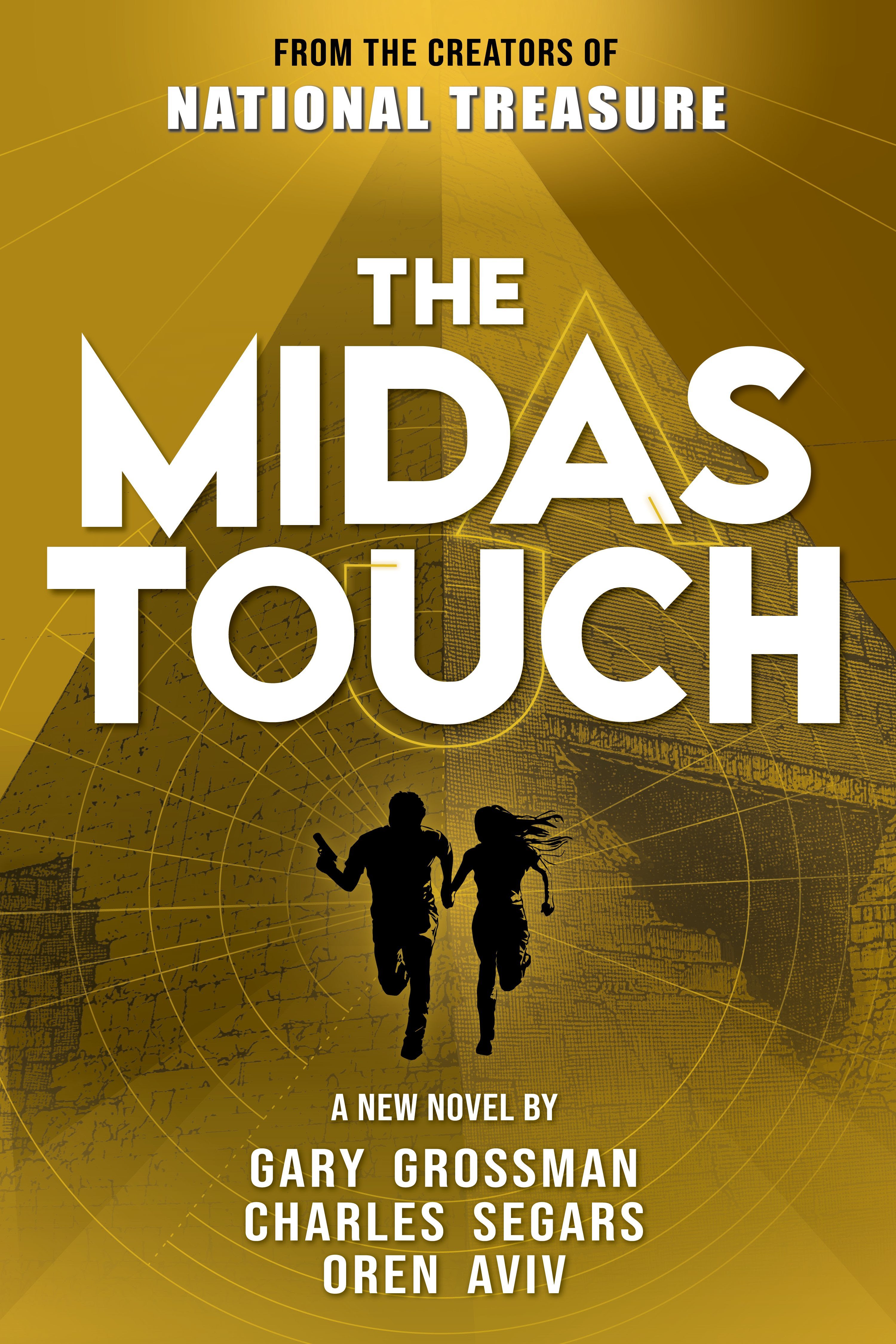
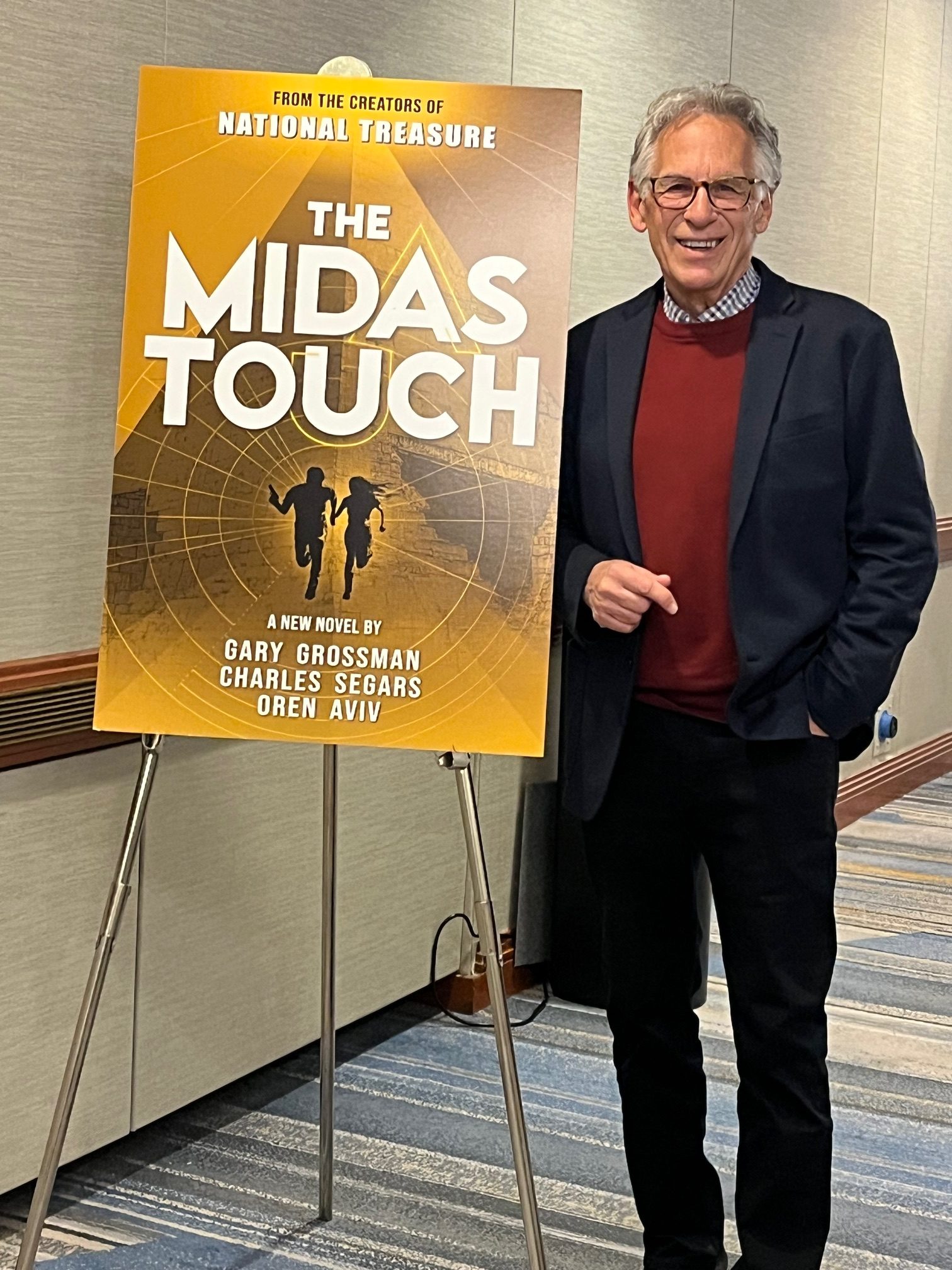
National Treasure meets Jack Ryan in THE MIDAS TOUCH
July 19, 1799. Napoleon’s armies advance into Egypt. In the steaming desert sands, his explorers unearth an astounding discovery: The Rosetta Stone. The tablet, cracked and incomplete, will eventually answer mysteries about ancient Egyptian history, culture, and science. But in the years since its partial excavation, world leaders, historians, scientists, and adventurers have speculated that the missing fragments could answer another age-old mystery.
THE MIDAS TOUCH is a globe-trotting adventure that follows CIA cryptologist/puzzle solver/savant Brady Donovan as he investigates the murder of his beloved mentor Dr. Hastings Kaufman, only to find that it leads to a search for the missing pieces of the famed Rosetta Stone and the secret it holds: The Alchemist Gold Theory – how to turn ordinary metals into gold.
Protagonist Brady Donovan partners with British archeologist Teppy Flynn and conspiracy theorist Avery Prophet. Only a heartbeat away is a diabolical Silicon Valley tech giant, D’Arcy Lauren Granier, and her henchmen.
The quest takes them through Napoleonic history and into a contemporary race through the streets of London, America’s backroads, the Caribbean, New Orleans’ French Quarter, Napoleon’s last island prison in the Atlantic, the Louisiana Bayou, and a massive, abandoned salt mine where pirate Jean Lafitte hid his treasures.
History, told in vivid flashbacks, jumps back to 1799 Egypt, and forward through the hundreds of years since, with pirates and presidents on the search for better or worse. Now Brady Donovan fights against the fast- ticking clock, relentless bad guys, and a Category 5 hurricane to where past meets present and greed and betrayal become deadly partners.
THE MIDAS TOUCH is written by international award-winning thriller writer Gary Grossman with Charles Segars and Oren Aviv, the creators of the billion-dollar National Treasure movie franchise.
Praise for THE MIDAS TOUCH:
"A perfect piece of entertainment with characters and a story that never disappoints. Poignant in places, nail-biting in others, the plot is accentuated by a take-no-prisoners attitude, similar to speeding down a slalom course with all its twists and turns. It's quite a ride!" ~ Steve Berry New York Times best-selling author
"The Midas Touch is a thrilling ride through history and modern-day, tantalizing the reader with intrigue, action, and adventure across a labyrinth of archaeological secrets and danger." ~ Raymond Benson, New York Times best-selling James Bond novelist
"Fans of The DaVinci Code will love The Midas Touch. Grossman, Segars, and Aviv have created an iconic character in Brady Donovan, a CIA cryptologist who trades in his pen for tradecraft to protect the world from a devastating economic weapon. Gripping prose, unforgettable settings, and non-stop excitement. A real page turner!" ~ K.J. Howe, international bestselling author of Skyjack writes
THE MIDAS TOUCH Trailer:
Book Details:
Genre: Suspense, Mystery, History Fiction, Globe-Hopping Intrigue Published by: Fayetteville Mafia Press Publication Date: June 2, 2026 Number of Pages: 334 ISBN: 9781949024999 (ISBN10: 1949024997) Book Links:Amazon | Kindle | Barnes & Noble | Goodreads | BookBub
Gary Grossman:
THE MIDAS TOUCH is written by international award-winning thriller writer Gary Grossman (OLD EARTH, the EXECUTIVE ACTIONS and RED HOTEL series) with Charles Segars and Oren Aviv, the creators and executive producers of the exciting and popular Nicholas Cage NATIONAL TREASURE movie franchise.
CHARLES SEGARS has served as a senior executive at Viacom, CBS, The Walt Disney Company, DreamWorks Pictures, and DreamWorks Animation. Segars is also known as Creator and Executive Producer of the Walt Disney Studios Motion Pictures hit movie franchise, National Treasure and National Treasure: Book of Secrets.
Currently, Segars enjoys a dual role as CEO of Ovation TV, the only multi-platform program service dedicated to the Arts and as President of Segars Media.
Segars is a respected global safety and security analyst. He advises a number of national security-related technology startups and is actively involved in governmental affairs.He has served as a White House Associate as an Advance Team leader for the Office of the President and Vice President of the United States of America, leading a number of secretive domestic and international trips.
Oren Aviv:
OREN AVIV ran Disney Studios from 2006-2010, after heading Disney Marketing for eight years. He became Disney’s first Chief Content Officer, and after leaving Disney he became CMO for 20th Century Fox Studios. In addition to executive producing a dozen films, he also co-created and was Executive Producer of Disney’s National Treasure film franchise.
Aviv was named “Marketer of the Year” three separate times by Advertising Age Magazine. He created breakthrough campaigns for the studio’s NARNIA, STEP UP, Pirates of the Caribbean, and the National Treasure franchises, and launched memorable campaigns for many of Pixar’s animated hits, including Finding Nemo, Monsters, Inc., The Incredibles and Cars. He also launched blockbusters such as The Sixth Sense; Pearl Harbor; Ransom; The Rock; Signs; The Waterboy; Armageddon; Unbreakable; 101 Dalmatians; Con Air; Crimson Tide; Freaky Friday; and Father of the Bride, as well as hundreds of other films under the Disney, Touchstone and Hollywood Pictures banners. As CMO at 20th Century Fox, Aviv created the campaigns for Rise of the Planet of the Apes; X-Men: First Class; Ridley Scott’s Prometheus; The Wolverine starring Hugh Jackman; and Ang Lee’s Oscar-winning Life of Pi.
As head of production at Disney, Aviv was responsible for greenlighting such hits as THE PROPOSAL starring Sandra Bullock and Ryan Reynolds; Tim Burton’s billion-dollar-grossing Alice in Wonderland; Pirates of the Caribbean: At World’s End; National Treasure: Book of Secrets; and the Amy Adams musical-comedy Enchanted.
My Review:
I really enjoyed this story. I LOVE history and I also really love mystery. Historically accurate fiction that adds relics and treasure hunts are my favorites. Starting in 1799 with Napoleon was interesting because everybody has heard of him. There is so much more. Codes, The Rosetta Stone, pirate's gold, murder, a cryptologist, and a hurricane set the scene for a great mystery. Add in the location from Egypt to New Orleans and you not only get history, but you also get a trip around the world. I felt like I was travelling with the characters and I enjoyed reading about the locations. I also really enjoyed the main characters. They are like Indiana Jones and Ben Gates. This book really needs to be made into a movie. There are also so many other things in this story. The codes involve science and math, while the geography leads to anthropology. One thing is for certain. This fast paced mystery had me wondering what other famous relics could be in book 2? I am giving this book a 5/5. I was given a copy, however all opinions are my own. I so wish this was a movie already!
Tour Participants:
Click through the other tour stops for can’t-miss reviews, insider interviews, exclusive guest posts, and more chances to win!
This giveaway is hosted by Partners in Crime Tours for Gary Grossman, Oren Aviv, & Charles Segars. See the widget for entry terms and conditions. Void where prohibited.
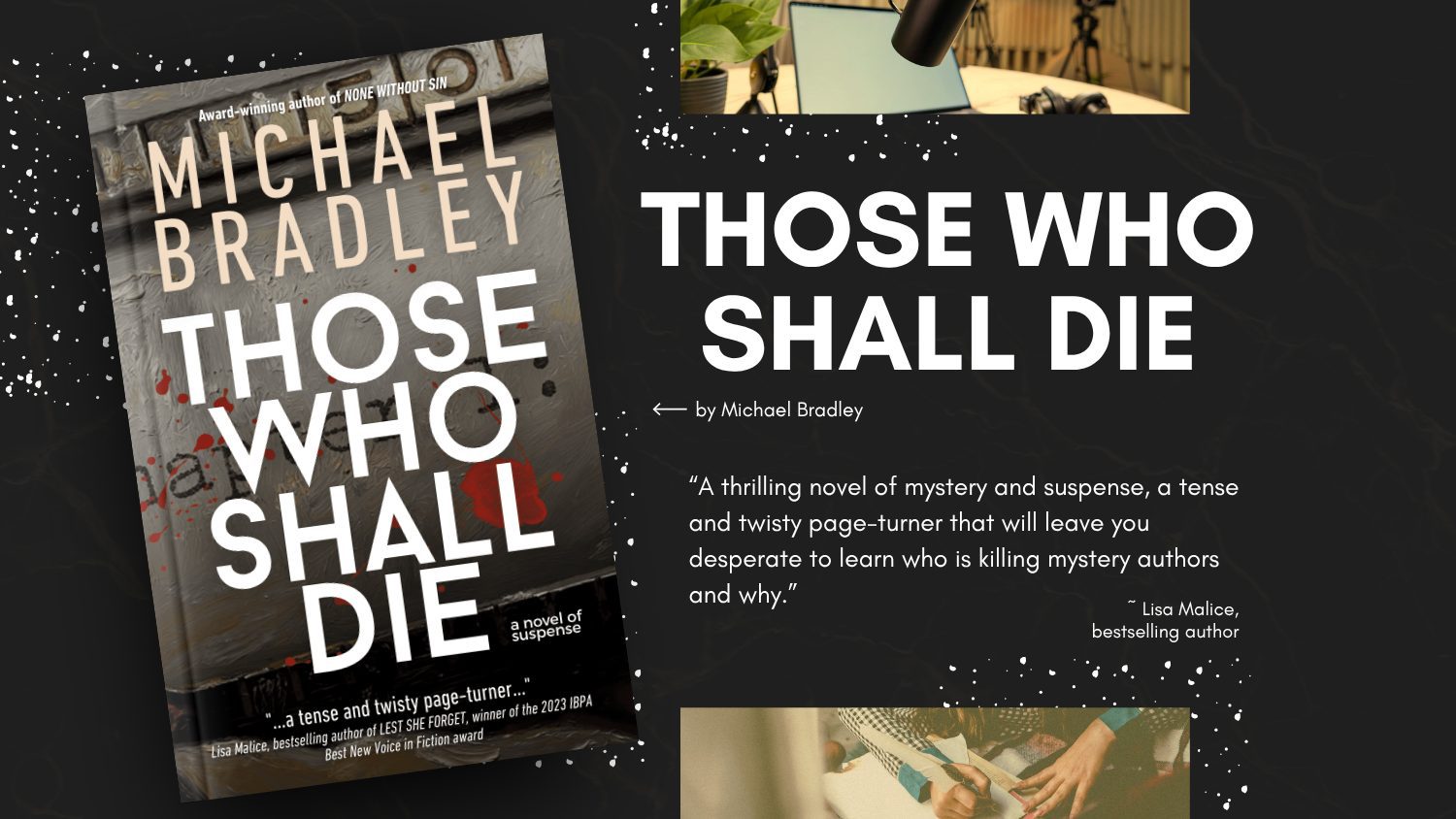
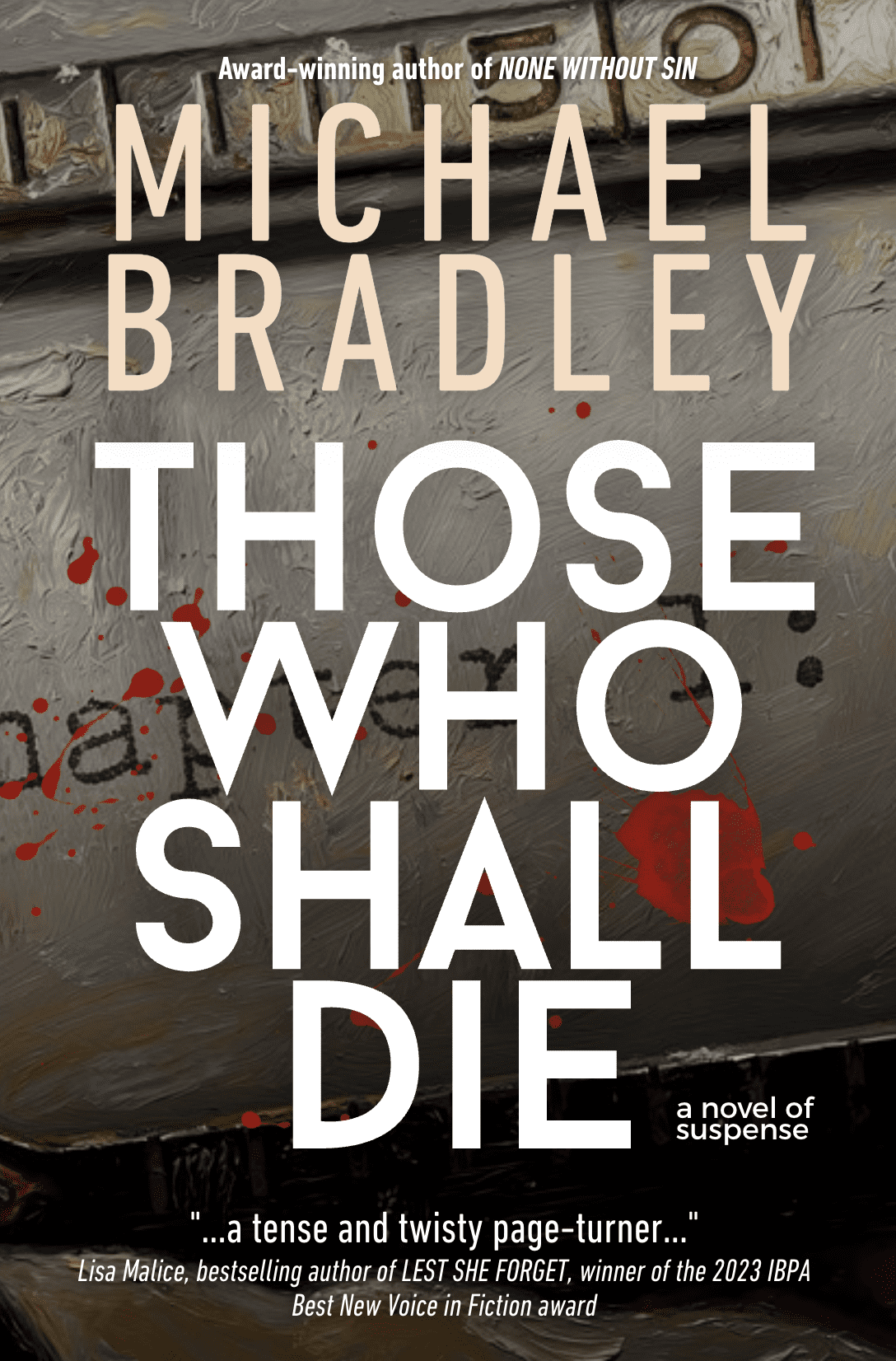
A collective of mystery writers, known as the Society of Fibbers, has captivated thousands with their addictive podcast—catapulting each member into the limelight. But when one of their own is found dead under chilling circumstances, the remaining Fibbers realize their newfound fame may have painted a target on their backs.
Rebecca Stanchion, one of the group’s co-founders, is convinced her friend’s murder is a tragic case of domestic violence—until a sinister attempt on her own life shatters that theory and threatens her family. Meanwhile, Zach Hargrove, a fellow writer, becomes obsessed with the cryptic black cards left at both crime scenes. Each card seems to whisper a warning: the killer is watching.
Is this the work of a fan driven to madness, or has betrayal seeped into the heart of the Society itself? As an annual writers’ conference approaches, Zach and Rebecca race against time to unmask the killer before the Society of Fibbers’ headline appearance turns into a deadly final act.
Praise for Those Who Shall Die:
"Michael Bradley has done it again! Those Who Shall Die is a thrilling novel of mystery and suspense, a tense and twisty page-turner that will leave you desperate to learn who is killing mystery authors and why." ~ Lisa Malice, bestselling author of Lest She Forget, winner of the 2023 IBPA Best New Voice in Fiction award.
"A well-written, clever whodunit with crafty twists that will keep readers guessing." ~ Jennifer Sadera, award-winning author of I Know She Was There.
"... keeps the reader's head spinning as secrets emerge, friendships fail, alliances dissolve, and animosities rise to surface until the final betrayal is revealed. A page turner that plumbs the depths of ambition, betrayal, and murder." ~ Jane Kelly, Author of the Meg Daniels mysteries.
Those Who Shall Die Book Trailer:
Book Details:
Genre: Amateur Sleuths, Suspense Thrillers Published by: Initium Books Publication Date: July 7, 2026 Number of Pages: 388 ISBN: 9780986200243 (ISBN10: 0986200247) Book Links:Amazon | Kindle | Barnes & Noble | BookShop.org | Goodreads | BookBub
Read an excerpt:
Chapter One
Zach Hargrove held the serrated hunting knife in a white-knuckled grip as he silently crept forward. No room for mistakes this time. This had to be silent, swift and deadly. Just one fierce thrust into the carotid artery. It would be messy, but she had to die.
Nellie sat—unmoving—in a black leather office chair, facing the third-floor windows that looked out over Old Mill Creek. If she was aware that he was behind her, she gave no sign. Her dark straggly hair hung over the back of the chair in tangled clumps. Zach couldn’t remember the last time he’d run a brush through it. She needed a wash too, but he’d given up on that long ago. Nellie had been exactly what he needed at first, but after so many years, she’d become more of a burden than a help. He hated having to move her heavy, awkward body from chair to chair, room to room. Caring for her had become arduous. No one would miss Nellie if he got rid of her . . .
Her head tilted to the right, blocking her neck from his view, and he hesitated. He wouldn’t be able to strike cleanly from this direction with her head tilted. He swapped the knife from his right hand to his left. The rubber handle felt awkward in his grasp. A few practice swings with his non-dominant hand felt odd and clumsy, so he tried some overhead plunges. Maybe he could stab Nellie in the back of the neck instead. A quick blow to sever her spinal cord, and she’d die in seconds. What if he yanked her head back and ran the knife across her neck, slitting it open from side to side? He shook his head. Too clichéd. Everyone slashed throats these days. He toyed, for a moment, with driving the knife through the back of the chair and into Nellie’s back. I’d never get the knife deep enough to kill her, he thought. She’d survive with a flesh wound—if that happened, he’d never hear the end of it.
With a frown, he shifted the knife back to his right hand and decided to continue with his original plan: one fast jab to the right side of the neck. Zach glanced at his prey. Nellie remained still, oblivious of what he was about to do. He inched forward, his gray Skechers silent on the plush beige carpet. His fingers tightened on the knife handle, and he drew his arm back. The muscles on his shoulder were taut, but his arm had a slight tremble. He had to get this right on the first try.
After two more cautious steps, he stood behind Nellie, staring down at a scalp of unkempt hair. Oh, how he hated that hair. With one barbaric swing, he brought his arm down, but the blow didn’t go quite as planned. The knife tip deflected off her head, tangled in a clump of hair, and plunged into Nellie’s shoulder.
“Damn it,” Zach shouted.
He stood for a moment, studying his handiwork. Nellie slumped forward, the knife standing tall in her shoulder.
He tried to withdraw the knife slowly, but the serrated blade caught on several threads and tore the seam in Nellie’s shoulder. Clumps of polyester stuffing—like giant cotton balls—tumbled out of the hole and fell to the floor. Zach let out a long sigh as he placed the knife on the nearby desk. Now he’d have to sew her up. He spun the office chair around and stared at Nellie. Her featureless face and black button eyes stared blankly back at him. Patches—both big and small—covered her arms, abdomen, head, and legs—scars of the many instances of his mistreatment.
“I’m glad you don’t hold a grudge,” he said.
Zach wrapped his arms around the life-size dummy and lifted her out of the chair, her canvas skin rough on his bare arms. A trail of white filling marked his steps as he manhandled her across the room and propped her up on the sofa.
Dropping into his desk chair, he reviewed the previous few paragraphs he’d written just before he attempted to kill Nellie. The murder scene “seemed” to flow, but he wasn’t satisfied with the way it turned out. His antagonist—the mysterious Mr. Price—had entered the home of Dallas Kincaid with the intention of killing Kincaid’s new girlfriend. But Zach had found the scene difficult to write. There was something about the logistics that bothered him, hence his attempt to “kill” Nellie, his long-time partner for acting out crime scenes. For her part, Nellie had endured a dozen or more stabbings, being thrown from windows, run over by cars, and even shot twice. And yet she never once complained.
Zach stood again, snatched a Bic pen from the desk, and paced around the room, pausing on occasion to glance out the windows that covered all four walls. The third floor of his house, his “Author’s Loft,” as he liked to call it, had a 360-degree view of the surrounding yard as well as the creek that flowed past the back of his property. The small Delaware town of Lewes hadn’t been his first choice of places to call home. But when he’d first toured the house three years ago, the bright openness of the room couldn’t have been more perfect for him. It satisfied his need for a place to write, and the room’s openness was preferred over the more confined spaces he’d seen in every other house he’d toured. He’d put an offer on the place immediately and moved in a month later.
As he paced, Zach furiously clicked the button on the pen with his thumb. He passed the lone bookshelf, stuck in the corner between the adjoining walls’ windows, and paused to study the colorful hardback spines of his previous eight Dallas Kincaid Mystery novels. Five of them had become New York Times bestsellers, but not the last two. His protagonist, Dallas Kincaid, had become increasingly more difficult to write over the past couple years. The character had become too clichéd, too much like every other amateur detective in the market, and Zach was struggling to keep each new book fresh and original. He was ready for something new, something different.
“This will be the last Kincaid novel,” he’d told his agent, Mariah Maddison.
“Don’t be too hasty,” she’d said. “You might regret those words once the book is released.”
With a sigh, Zach slipped the Bic pen into his pants pocket, returned to his desk, and hovered his fingers over the keyboard of his laptop. He stared at the text on the screen, the words fading together into a jumble of pixels that made no more sense than when he’d read them a few minutes ago.
Pushing back from the desk, he growled, “Hell,” and stood, rounding the half wall that hid the stairs from view and descended into the house below.
In the kitchen, Zach grabbed a Sierra Nevada Pale Ale from the fridge, twisted the top off and took a long sip. A calendar—tacked to a nearby corkboard—was open to the month of June. A quick glance over the dates made his stomach churn. He had until mid-July to finish the first draft of the next Dallas Kincaid novel. That gave him six weeks. The manuscript was only thirty percent done. He sighed as he eyeballed the next few weeks. There was an upcoming recording session for the Society of Fibbers podcast. A book signing with Jasper Stone and Martina Vargas in Virginia. He flipped up the calendar page and looked over July. The week after Independence Day was blocked out for ThrillNYC in New York City. Damn, that only gives me five weeks to finish the book. His stomach twisted in knots as his anxiety rose.
Zach moved through the open dining room to the sliding glass door, stepped onto his back deck, and gazed out across the creek. The tide was out, and the muddy banks were exposed to the Tuesday afternoon sun. An eagle was perched in the tree that hung over the water. The lush cordgrass stood tall along the edges of the creek, outlining the maze of the twisting waterway. A gentle breeze rustled the tips of the grass. The faint aroma of marsh water punctuated each deep breath. So peaceful. So relaxing. He closed his eyes and listened to the tranquility around him. But it did little to subdue the angst within him. When was his next therapy appointment? Maybe it was time to try some of the meds his therapist had so often suggested.
From within the house, the shrill of his mobile phone interrupted the serenity of the moment. Moving back into the kitchen, he scooped up the phone from the counter where he’d left it.
The voice that greeted him was grave and somber. “Zach? It’s Rebecca. Something terrible has happened. Martina Vargas is dead.”
***
Excerpt from Those Who Shall Die by Michael Bradley. Copyright 2026 by Michael Bradley. Reproduced with permission from Michael Bradley. All rights reserved.
Author Bio:
Michael Bradley is an award-winning author from Delaware who started life as a radio disc jockey, working at stations in New Jersey and West Virginia. His time in radio provided him with a wealth of fond, enduring, and sometimes scandalous memories that he hopes to one day commit to paper.
After spending eight years “on-the-air,” he realized that he needed to get a real job. He has spent the next twenty or so years working in Information Technology. And yes, he has said “try turning it off and on again” more times than he wants to admit.
Never one to waste an experience, he used his familiarity with life on the radio for many of his suspense novels. His third novel, DEAD AIR (2020), won a Foreword INDIES Award and a IBPA Benjamin Franklin Award.
This book had me guessing who the killer was and I kept changing my mind. I really enjoyed the friendships between the "fibbers". They were real people that had real relationships that were put to the test. They had real reactions as the killer confused them and blurred the lines of friendship. Add the life of an author with book signings and deadlines. There was definitely a feeling of urgency. We had to find out who the killer was and who was the next victim. Were all the "fibbers" going to die? As secrets emerge, Crazed fans and multiple points of view add to the drama. However, my favorite part of the story was the calling card that the killer left with the bodies. It really made me think about what it could mean. Rafi definitely had no filter and said whatever he wanted, no matter the foul language. This book is not for readers that dislike swearing. The ending was interesting and I liked that the author chose to go past the main unmasking of the killer and actually visited the killer at the prison, I can not wait to read more from this author and these characters. I am giving this book a 5/5. I was given a copy to review, however all opinions are my own.
Tour Participants:
Click through the other tour stops for can’t-miss reviews, insider interviews, exclusive guest posts, and more chances to win!
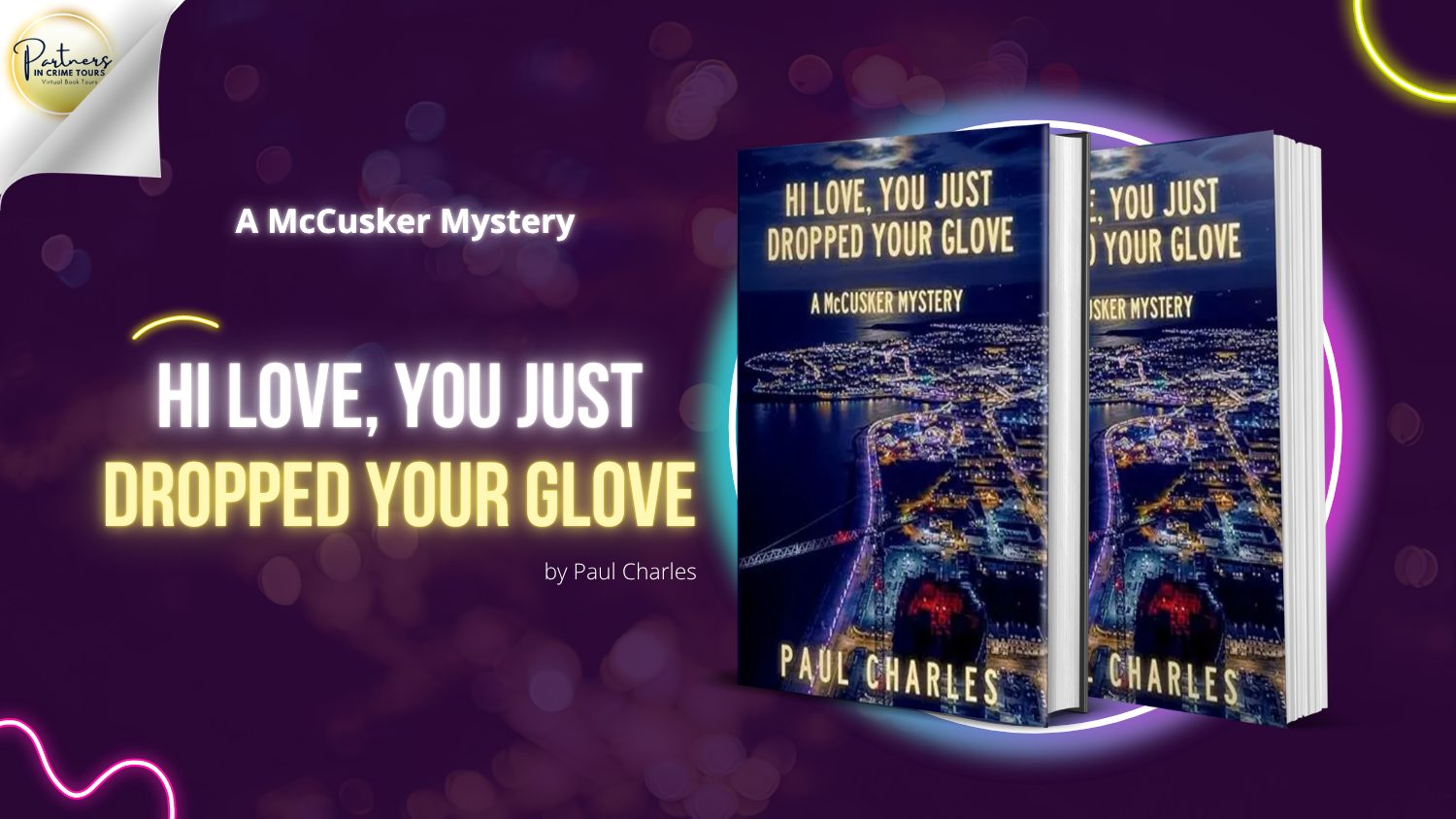
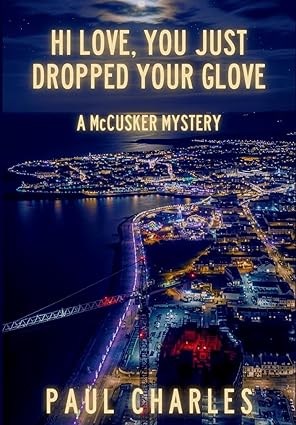
Thomas Barry, Lefty Kelly, and Brendy McCusker were all teenage boys who were roaming the streets of Portrush, County Antrim, in Northern Ireland in 1976 when Thomas Barry quite literally bumped into Isabella Scott, and he uttered the words of the title. In July 2019, the same Thomas Barry's remains were discovered at the foot of the Pilgrim's Steps in the Portrush Harbour. There were an extra 200,000 people visiting Portrush that week as The Royal Golf Club played host to Tiger Woods and Rory McIlroy and the UK Open Tournament.
McCusker and DI Lily O'Carroll are conscripted from the PSNI (Police Service of Northern Ireland) in Belfast to help the already stretched local police force work on the case. They discover McCusker's childhood friends Barry and Isabella Scott had married and then...well then, everything became very complicated relationship-wise involving Isabella's sister, Colette, lawyers, accountants, and showband singers. Thomas had become an ultra-successful property developer, sometimes in partnership with the Buckley Brothers, at least one of whom doesn't mind the cowboy approach to work. Meanwhile, McCusker is pining over a recent relationship he had started back in Belfast with O'Carroll's sister, Grace.
Set against the backdrop of the (actual) UK Golf Open taking place in a small seaside town, where absolutely everyone has an opinion, and their opinions they are keen to share.
Praise for Hi Love, You Just Dropped Your Glove:
"Paul Charles' Hi Love, You Just Dropped Your Glove is a page turner par excellence. Written written with Charles' customary verve. Another brilliantly compelling atmospheric effort from a master crime writer."
"A welcome return for Brendy McCusker... Charles crafts with such a careful eye on the sparks that can fly—some of them charming, some witty, some downright menacing—between characters who don't happen to see eye to eye, or sometimes even to be operating in the same galaxy. Once again, it's hard to resist a hero who realizes, 'He just had a habit of opening his mouth and not knowing what was going to come out." ~ Kirkus Reviews
"Charles's skillful depiction of the many sides of love and its strange bypaths lifts this clever novel well above the genre average." ~ Publishers Weekly
"Paul Charles is an outstanding author of crime fiction novels. They are models of character development and powerful observations of people the detectives meet. I enjoy reading his books." ~ Irish American News
"Charles's skilful depiction of the many sides of love and its strange bypaths lifts this clever novel well above the genre average." ~ Publishers Weekly
"Charles has a wealth of experience in the crime genre from his past Kennedy and Starrett novels and the McCusker series delivers the same blend of mystery and engaging protagonists. The characters have an authenticity that Charles has fine-tuned throughout his writing career. Charles ability to weave real-like details helps bring the story full to life. A Day in The Life of Louis Bloom is both a love letter to Belfast and a gripping thriller." ~ Aoife Bradshaw, Hot Press
"Charles In Full Bloom With Novel... a thrilling page-turner." ~ Sunday World
"Amusing light-hearted entertainment from Paul Charles." ~ The Irish Independent
HI LOVE, YOU JUST DROPPED YOUR GLOVE Trailer:
Book Details:
Genre: Police Procedural, Crime Fiction Published by: Level Best Books Publication Date: March 31, 2026 Number of Pages: 382 ISBN: 9798898201050 Series: A McCusker Mystery, Book 3 | Stand Alone Book Links:Amazon | Kindle | Barnes & Noble | BookShop.org | Goodreads | BookBub | Level Best Books
Read an excerpt:
Chapter One
I was born here and I’ll die here, against my will. —Dylan
‘Hi love, you just dropped your glove.’
When she turned to face him, he was amazed. He remained totally in shock to the extent he became a blabbering idiot.
‘Just now as it fell from your coat pocket…’ he continued, ‘I caught it before it hit the wet ground… Honestly it didn’t get wet. I mean it’s a little wet, but only from the rain and not the pavement…agh…’ and mid-sentence he reluctantly turned and chased after his two mates.
She was the most beautiful creature he’d ever set his eyes on during his seventeen years on this earth. When she’d passed him a few life-changing seconds beforehand, she was walking, arms interlinked in the midst of two friends with her head bowed to the pavement. Consequently, he’d missed her green eyes, hidden by her long black hair, and he’d missed her quiet demeanour, but, most of all, he’d also missed the chance to make a connection.
He insisted his two mates, Brendan and Lefty, continue walking around the streets of Portrush with him until darkness fell ninety minutes later. He was working on the theory they’d bump into the three girls again. They’d discovered, to his cost, the only thing more difficult than finding someone in Portrush in the peak holiday season was finding someone on the deserted streets of Portrush during the off-peak season, when Ulster’s number one tourist centre reverted to its more comfortable status of winter ghost town, aka Ghostrush.
Thomas Barry—Tommy to his acquaintances, Tom to his good friends—minus his two mates was back on the streets the following morning, just before eight o’clock. He walked the short distance from his parents’ house in the sedate Antrim Gardens to the nearly (but not quite) refurbished railway station in Eglinton Street, passing the moth-balled Barry’s (historic) Amusement Arcade on the way. It was a journey just like he’d done most days of his life. Most other days of his life. though, he’d just taken Barry’s (no relation) and every other local landmark, for granted. That Sunday morning in October 1976 though he’d studied every nook and cranny around the streets of the Port as if his life depended on it.
He felt it did.
When his friends met up with him just before lunch time, he admitted to them he’d already had tea and toast in Portrush’s Holiday Hostel, with its ultra-colourful rooms; the once elegant Adelphi Hoteland The Atlantic Hotel, with its spectacular views, in the vain hope the three girls were out-of-towners. The other hotels and guest houses were all closed for the winter, he claimed. Still, he’d tried them all, “just in case, you understand.” He also, for one who’d always gone to great trouble to keep the majority of his feelings inarticulately to himself, articulately explained he felt for the sake of his well-being, if not his life, he needed to find this girl. He also admitted that, not only did he not know what he was going to say to her when, and if, he met her, but if such an accidental, on purpose, meet happened he’d be so tongue-tied again, he might even need to walk on past her. He just knew he really needed to find her. He told them he’d been awake all-night thinking about her. Lefty put him out of his misery by offering to take him to some of the out-of-town hotels. The two of them hopped on Lefty’s trusted red Vespa 125 scooter and headed off out past Kelly’s trailer park and bar and on to Castle Rock, Portstewart, Portballintrae and even Bushmills.
They returned just over an hour later with the Vespa’s petrol tank empty and their four arms all the one length.
Thomas Barry admitted to his two best friends he’d never felt so convinced about anything before in his life. A real-life girl had never ever had such an effect on him before. Isabella Adjani on the silver screen yes, but a real live human, certainly not. He most certainly accepted the fact he was never ever going to meet the long-haired, green-eyed girl again in his life.
He admitted how weird this feeling was to him.
Nonetheless he continued his search.
He thought of all the things he could have done, should have done. Perhaps all of them were things capable of scaring her off for life. But what did it matter now? He’d most certainly lost her for life.
The lads wanted to go to the Old Harbour Bar. Even with the new glitzy restaurant extension, accessed by a half a flight of wooden stairs, it was still the cosiest bar in the winter and their favourite watering hole. He declined, suggesting he might join them later. Once again, he took to the streets of Portrush. The same familiar streets he had taken for granted all his life, but which now took on major importance due to the fact they may be keeping him from finding the green-eyed girl. He tried chastising himself for feeling sorry for himself. It didn’t work. How could it possibly work when someone, something, a God even, if such a spirit existed, had allowed him to experience this special creature and then not equip him properly about how to approach her? He chastised himself further for not considering what he’d say to her if, or when, he met her. He’d already let himself down once by blabbering away when he had the perfect excuse to greet her. Equally he felt if he had something rehearsed it would have sounded too false, stifled, insincere and a chat up line. He kicked himself over his rap about her glove being wet not because he had let it fall on the wet pavement but because it had gotten damp in the rain.
He’d never been one for the chat up lines. They’d left those to Lefty. Funny enough this approach hadn’t worked out for their lead wingman either. Thomas Barry had often wondered if they’d become mates, “blood brothers” just so they could hang out together and look for girls. Anyway, they had launched their little gang, the BLTs. They even had their own unique motto: May the Sauce be With You. It was funny at the time. They’d picked it over a meal together in Morelli’s as they simultaneously chased the food-saving flavouring known as HP. They’d also debated using: Life is a Beach and Then the Tide Goes Out,. Considering their endgame objective, they had unanimously voted against this option on the grounds it was too negative. As he wandered around the deserted streets, now it had gotten down to the nitty-gritty, he wasn’t so sure about their motto either, or even about their gang in the first place. Lefty was always complaining three wasn’t a good number to hang out in. If they met two girls and got through the even more complicated task of chatting them up, then the girls would surely feel sorry for the additional boy they would have to exclude due to the mathematical impossibilities. He reckoned maybe they could possibly have made the problematic maths work down in the more liberal Belfast. In the meantime, they had agreed they would figure out such a scenario as and when it arose. Lefty had claimed the girls would probably make their preference known and they, the boys, would just have to deal with it. They’d been happy to leave the tactics to Lefty. Even though Lefty’s tactics had, so far, been 100% unsuccessful, they still left him in charge. The alternate didn’t bear thinking about.
Tommy wondered if it would be any easier if, and when, one of them found a girlfriend and peeled off their gang as it were. He wondered who’d be the first to find a girl. He thought if you were a betting man and you followed the odds, then Lefty should be the first to find a girl. But then what would they do? They’d surely be lost without the tactics man. Or would they?
‘At least the rain has stopped,’ he said aloud, as he rounded the corner of the forsaken Mark Street Lane and into the desolate Atlantic Avenue.
‘Hi Love,’ he thought he heard a ghostly breathy voice say, not much above a whisper, ‘you haven’t found another glove, have you?’
There she was, there right in front of him on what would now become the hallowed, Atlantic Avenue. His green-eyed girl’s green eyes were smiling straight at him.
He was so intent on finding her he pretty much nearly walked straight into her. He knew if she hadn’t spoken first, he would have walked past her. Lucky enough before he’d a chance to figure out what he was going to say she spoke again.
‘What am I like?’ she started, ‘I’m forever losing a glove, thankfully never both at the same time, mind you, always just the one at a time. The one you picked up for me I…’
‘I’ve been looking for you all day,’ he admitted, his voice sounding a lot calmer than he felt.
‘Mmmm,’ she replied, studying his face and sounding like she knew, and accepted, such an admission wasn’t as weird as he feared, ‘you’d look good with a moustache.’
Of all the things he’d imagined her to reply, and most of them also included her rushing off as quickly as her shapely legs would carry her, this was not even in the top 1000. It wasn’t as though he had actually come up with more than three possible replies.
Before he knew it, they were involved in a natural freewheeling conversation.
She seemed inclined to linger rather than to walk away.
At a very brief lull in the conversation, they both silently acknowledged they didn’t want the conversation to be stifled, so they spurted out their next questions simultaneously.
‘Do you live here?’ Tommy asked.
‘Who were you talking to as you walked around the corner?’ she asked over the top of his question.
‘No, I’m at the University of Ulster in Coleraine and one of my course mates invited me and another friend over to her parents’ house for the weekend. Her parents own a wee guest house over by the West Strand,’ she said in response to his question.
‘I was talking to myself,’ he admitted, ‘what’s your friend’s name?’
‘Gilly Hutchinson.’
‘Oh,’ he said, without even meaning to.
‘You know her?’
‘Well I know of her,’ he replied, ‘I know her sister.’
‘Which one?
‘Gilly would have been a few years ahead of me,’ Tommy replied.
‘Right,’ she replied, without allowing him to finish, ‘so you’d know the youngest, Emmi Mae.’
‘Yeah we were really good friends when we were…oh 13 ish and then she outgrew me.’
‘Ah yes, it happens at 13 or even 13-ish.’
‘Tell me about it,’ he offered more to himself, ‘so was that Gilly the blonde-haired girl with you yesterday?’
‘No, Gilly was swotting, you saw the eldest sister, Adele, who’s just great craic altogether.’
‘Okay, figures, I don’t know her at all,’ he replied.
He looked at his green-eyed girl out of the corner of his eye. He couldn’t see her as well as he’d seen her yesterday when they’d met face to face. She still looked stunning even though her long dark hair covered the side of her face. He couldn’t see those amazing green eyes though. On the upside what he’d missed yesterday was her personal scents. She smelt of a blend of soap, shampoo, mixed with little hints of a heather based perfume. The combination was totally intoxicating. ‘I’m Tommy,’ he offered, extending his hand, and knowing it was an excuse to steal another glimpse of her stunning emerald eyes, ‘Tom Barry.’
‘I know,’ she said, offering her own hand in return.
‘You know?’ he said, surprised while noticing two of her top teeth protruded a wee bit to the extent it looked like her top lip was going to have trouble covering them.
‘Yes, Adele told me,’ she said, as she smiled, ‘she also said you weren’t part of the other Portrush Barry family.’
‘Yeah, sorry about that,’ he said, still holding her soft skinned hand and shaking it gently, determined to never let it go again if he could get away with it. ‘’Fraid it also means I’ll not be able to get you free rides on the dodgems.’
‘I’d be more of a Barry’s Big Dipper kind of girl, anyway.’
‘Ditto on the Big Dipper, although I can’t pull any strings there either,’ he offered regretfully, while thinking he didn’t see her as being a Big Dipper kind of girl. All that screaming seems so alien to one so reserved and private. ‘I could get you a pony ride on the beach though if you wanted?’
‘Accepted,’ she replied, seeming content to leave her hand where it was, she leaned towards him, her nostrils wriggling the more they bridged the gap to his ear, ‘but not being part of the amusements also means you won’t smell of petrol and grease and candyfloss.’
‘Or Daulse and Yellowman,’ he added, attempting to complete her list and praying it was a compliment, ‘oh look…’ he continued and pointed with his free hand to the cuff of her red duffle coat, ‘there’s your missing glove, stuck up the sleeve of your coat.’
Sadly, for Tommy, this gave her an excuse to break away from him.
‘I’m Isabella,’ she said, retrieving her glove, ‘Isabella Scott and the pleasure to meet you on this wintery weekend, is all mine. That’s twice you saved me, Tommy, which means I’ll never forget you.’
And that, was how Tommy Barry and Isabella Scott first met.
Neither Isabella, her two friends, Gilly Hutchinson and Jane Murray nor Tommy Barry’s two friends, Lefty Kelly and Brendan ‘Brendy’ McCusker, would ever forget Tommy Barry. This fact was even more definite now that forty-three years later (bar three months) on Wednesday July 17th, 2019, the very same Tommy Barry died a very unnatural death.
***
Excerpt from Hi Love, You Just Dropped Your Glove by Paul Charles. Copyright 2026 by Paul Charles. Reproduced with permission from Paul Charles. All rights reserved.
Author Bio:
Paul Charles began his career in music at fifteen years old, managing his first band, The Blues by Five, in his hometown of Magherafelt in Northern Ireland. He moved to London in 1967 intending to study civil engineering but was quickly drawn back into the music world. In the 1970s he worked in multiple roles for the Belfast prog rock band FRUUPP, who signed to Dawn Records and toured widely across the UK and Europe. Charles lyrics for Sheba's Song were later sampled and used as Soon The New Day by Talib Kweli featuring Norah Jones on the album Ear Drum which debuted at #2 on the Billboard Top 200 chart in 2007. After FRUUPP disbanded Charles co funded the Asgard Agency and has represented major artists including Crosby Stills & Nash, Jackson Browne, Tom Waits, The Kinks, Van Morrison, Robert Plant, Ani DiFranco, Gordon Lightfoot, Nick Lowe, Elvis Costello, Loudon Wainwright III, John Lee Hooker, and Ry Cooder. He has programmed the Acoustic Stage at the Glastonbury Festival for the last 38 years. A life long writer he published his first Christy Kennedy mystery in 1997 Level Best Book have just published his 22nd mystery - Hi Love, You Just Dropped Your Glove.
Interview.
When did you first realize you wanted to be a writer?
I was doing a weekly column and articles for two Belfast publications –
City Week and Thursday Magazine in the late 1960s. I enjoyed the process a lot,
but I could never find a way into the great Ulster Novel. All attempts ended up
in the dustbin, and I would admit deservedly so. Then I read the master, Mr
Colin Dexter and discovered the three golden rules of Crime writing: Always
strive to work out:
Who did it.
Why they did it.
How they did it.
(and not necessarily in that order.)
That was when I realized I wanted to write.
How long does it take you to write a book?
Maybe a year, but in that year I’d also be working on other projects:
short stories; Hot Press articles; editing and ideas for future mysteries
What is your work schedule like when you're writing?
If I’m working on the first draft of a story, I religiously work each
day from 06.00 to about 09.30 (am). I have found to my cost that working beyond
that time can be counter productive
What would you say is your interesting writing quirk?
When I start a new book, I don’t know who committed the crime. I feel
like my detective (either Kennedy, McCusker or Starrett); myself, and
(hopefully) the reader, are all attempting to solve the crime at the same time.
How do books get published?
Luck, a good agent, self-belief or meeting Level Best Books. Sometimes
even a combination of all four.
6.Where do you get your
information or ideas for your books?
I read a lot, (fact and fiction) always live in the moment; go for long
walks; let my imagination run wild, and imagine I’m a camera.
When did you write your first book and how old were you?
First book, I Love The Sound of Breaking Glass
in 1997. I was 48 years old. First short story The Pratie Gatherer in
1975. I was 26 years old.
What do you like to do when you're not writing?
Read, listen to music, walk, go to the movies, go to gigs, hang out and
pretend I’m not writing.
What does your family think of your writing?
Very supportive. I rely on Catherine my wife; she’s the fiercest
critic, always honest, yet always fair.
What was one of the most surprising things you learned in creating
your books?
How much I would enjoy the writing process. I never dreamt the feeling
would be this blissful.
How many books have you written?
26
Which is your favorite?
Couldn’t (wouldn’t) say. But The Lonesome
Heart is Angry does best loans in the libraries. Equally Hi Love, You
Just Dropped Your Glove – the third in my McCusker series, which is set in
Northern Ireland –I’m particularly fond of. I admit that might just be because
it’s the latest title, but equally I would say I love the way McCusker and
O’Carroll have taken over the story.
Do you have any suggestions to help me become a better writer? If
so, what are they?
Believe in yourself. Write the book you’d love to read. Please never
forget that agentsandeditors frequently get it wrong.Perseverance pays!
Do you hear from your readers much?
Yes.
What kinds of things do they say?
Be careful crossing the road and write home often.
Do you like to create books for adults?
Of course, but it does take a magic talent to write stories for kids.
What do you think makes a good story?
A story which is difficult to put down, and when you do, you can’t wait
to get back to it the next day. For me a good story is a story, which, even
though it is fiction, reads as a true story.
As a child, what did you want to do when you grew up?
True story. Even though I grew up in rural Northern Ireland, I wanted
to join the Royal Canadian Mounted Police.
What would you like my readers to know?
That I believe the success of a good book always depends on the reader.
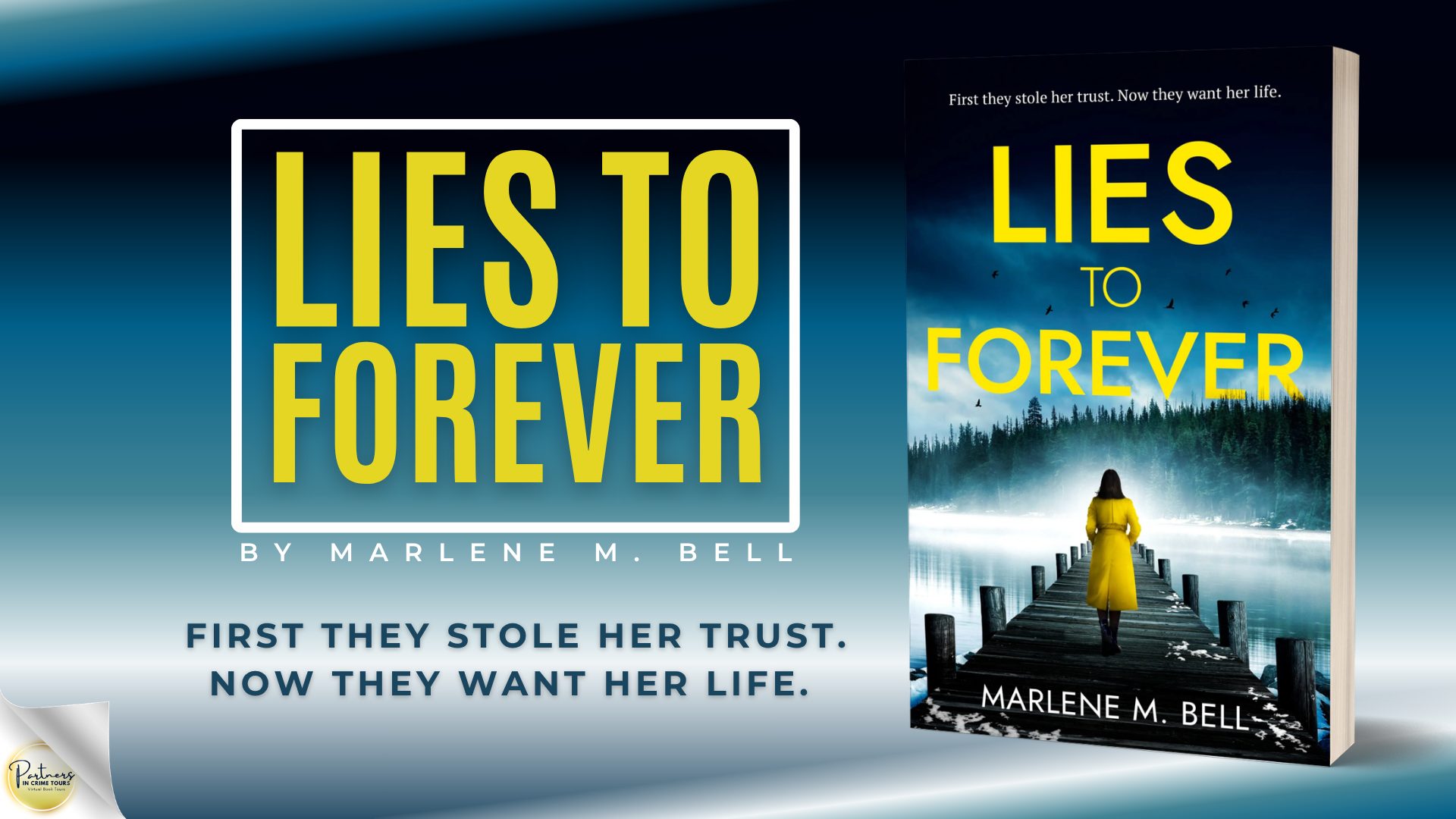
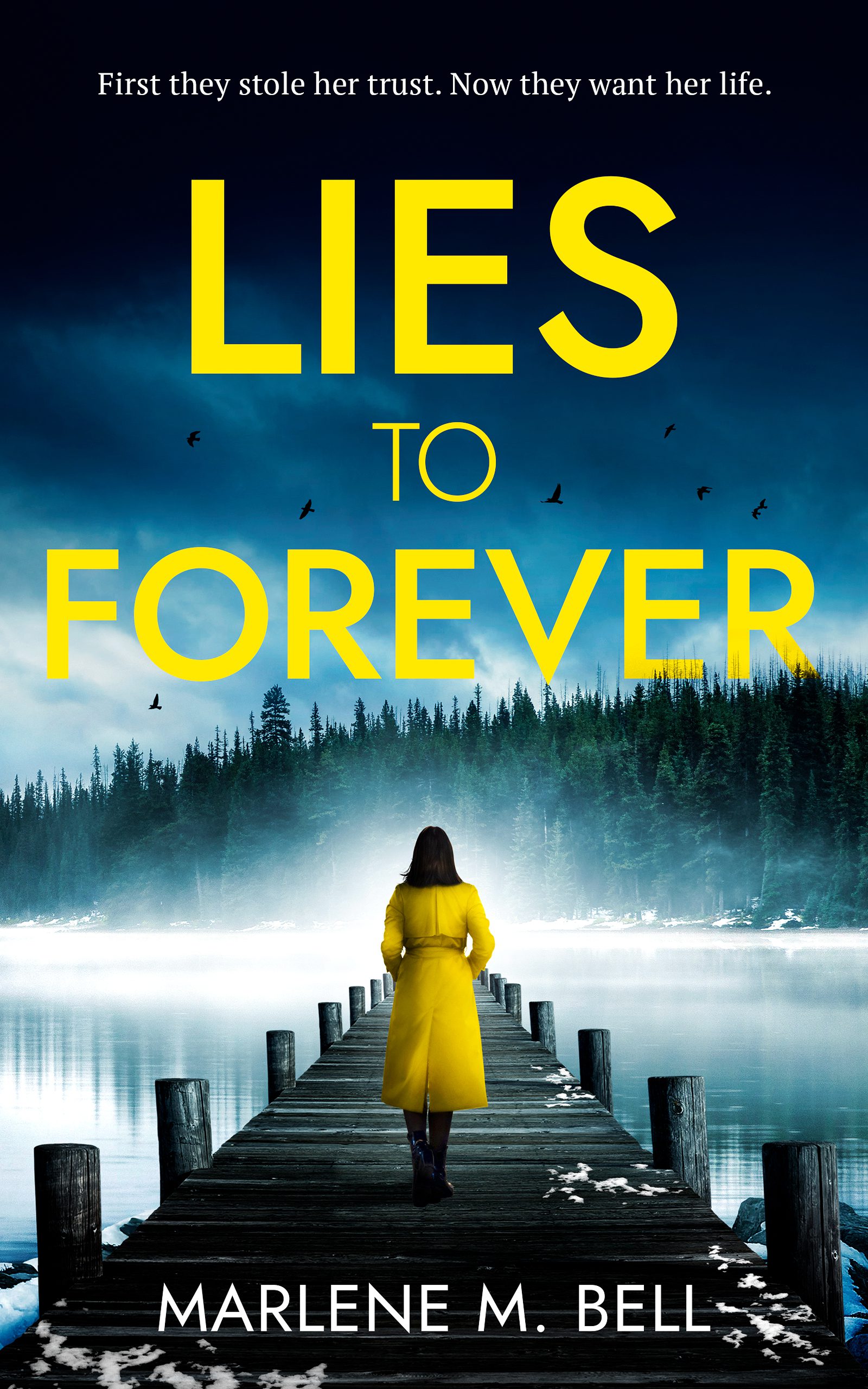
First they stole her trust. Now they want her life.
April Manning’s generous nature has always been a gift, and her greatest weakness. After being scammed out of her life savings by a trusted friend, April is left with an eviction notice and one last hope: reclaiming her position as an interior designer at her old architectural firm, even if it means a showdown with head architect Hunter Ellis, her cheating ex.
But that’s not the only hitch. When the owner of the firm turns up dead, the last thing April expects to find is the bloody murder weapon on her doorstep.
Now the killer sets a plan for April and suspicion flares at every turn…from the mysterious new handyman, to an estranged family member she’s tried to forget. Chased from her dream home and cornered like prey, April is hemmed by the wintry forests of Tennessee with few options. As chilling memories of childhood abandonment haunt her, it seems everyone has a hidden agenda to take April down.
Only one thing is certain. A monster is stalking Smoky Creek, and April must unmask them before they land the fatal blow.
Readers of Sarah Alderson and Kiersten Modglin will love the twisted betrayals and dark obsession of Lies to Forever, the latest standalone thriller by award-winning novelist Marlene M. Bell.
Praise for Lies to Forever:
"A must-read for fans of smart, character-driven suspense fiction. Highly recommended" ~ The International Review of Books
"Author Marlene M. Bell has crafted a gripping, psychological thriller. ...a suspense-laden drama where the twists and turns of the plot are genuinely surprising and rewarding." ~ The Book Review Directory
I was evicted twenty minutes ago. The notarized rent-to-own contract sitting in my desk drawer can’t stop it, but my landlord, Glenn, can. Three weeks from today, everything in my name will be sold at a yard sale or hauled away in a trailer destined for a storage unit I can’t afford.
When I temporarily set aside my job at Marsh Architects with the option to return, Damian Marsh asked for an update in January. I set up today’s appointment with him weeks ago without the knowledge of how eager I’d be to get back to interior design. The meeting can’t come soon enough.
The elevator in the Damian Marsh Group’s offices, in what we call the icebox, hasn’t changed in almost a year. Shivering does little to cool my anger over being homeless. I trusted a landlord to abide by his lease agreement and not go back on his word. My livelihood was set aside to care for Glenn Sutton, a burn victim, when he was flat on his back following rehab from an explosion. Glenn had been in a bad way. Because I live in the spec house he built, I helped him out when he had no one else. Our verbal deal outside of the payment contract was free rent in exchange for helping him recover.
He ended our casual arrangement today with a tacky notice on my door.
Without so much as a warning.
My temple thuds against the elevator wall, the mechanical hum soothing my misery and preparing me to pitch myself like I would to a client. I haven’t a clue how to talk to Damian with dignity when I’m so needy and desperate for a job. Our ten o’clock meeting holds my immediate future by thin threads of hope, and I’m fresh out of miracles.
The elevator pings, and the doors split apart to reveal creamy floor tile and wall art in five shades of taupe. The lobby-scape of the 1990s—a decade to run from whenever possible—boasts neutrals instead of bold florals for posh designer homes, now all the rage. Shouldn’t an architect’s foyer mirror the current trend?
“April.”
My spirits climb as I catch my name and a whiff of cheap aftershave. Being recognized by colleagues after nine long months in seclusion is a good sign, and I confidently step forward, one hand on the empty billfold in my coat pocket and the other through the handle of my portfolio case. I wiped its leather cover free of dust moments before the elevator ride to the office.
Whang.
A teeth-jarring jolt from an inconsiderate oaf with a clipboard nails me. Force of impact and surprise take us both off our feet. Blood swirls in my mouth as I plant a knee and palm to the tile, rolling off to my left. My snow boots clear the closing elevator doors just in time. The guy’s weight, and shooting pains in various areas of my body, knock the breath from me. If not for the thick wool coat taking the shock, I’d be hurt worse, but even so, I can hear the sick crunch my right knee makes on the floor’s hard surface.
A pair of stiletto heels clacks in our direction, belonging to Damian’s receptionist, Solana Soto, I suspect. Her desk faces the elevator. We aren’t close friends by any means, and I recall in two words how well Solana does her job: cool and efficient.
“I… I need to breathe,” I manage to grind out in two quick breaths. “Get off.”
The man lifts his torso and whirls away, a blur of brown overalls and dirty gym shoes.
“Klutz,” he says. Tall doesn’t begin to describe his height, and his arms appear to be as long as his legs. “Are you hurt?” Fully dilated eyes glare at me with such disdain, his question feels phony somehow. It’s as if I’m at fault, and Klutz is my name.
My kneecap is begging for attention, and my upper arm aches where he plowed into me, but I keep that to myself. Instead, I offer a feeble smile and scramble to my knees.
A familiar hand reaches down and takes mine. “I’ve gotcha. If you can walk, we’ll assess the damage in my assigned cubby. Take your time, babe.”
Haven’t heard that in a while.
Hunter Ellis, lead architect on Damian’s team, guides me to his glass-walled office, away from the collision scene and the guy wearing work clothes.
I sit in front of Hunter’s drafting table, with one of those frozen gel ice packs used for shipping pressed against my knee, and watch Solana stroll in with my discarded portfolio. She’s dressed in a black suit and a red floral blouse with pink undertones, a complement to her dark outfit and thick ebony hair that falls to the middle of her back. She sets my drawings against the jamb, leaves Hunter’s door open to the foyer, and returns to her post without a word. I can’t help but smile after her. It’s Solana’s cool, capable way.
Hunter returns with a packet of frozen vegetables. Another cold shoulder inbound. I haven’t the faintest idea where he got them and hope I’m not stealing someone’s lunch. His hair is much shorter and a lighter brown than when we dated. The new style makes him look five years younger. That, and he’s been working out in the gym. He looks fit and ripped.
A glance through his third-floor office window confirms that recent snow covers the parking lot and surrounding cedars. My teeth chatter at the visual, even though I’m in a climate-controlled room. I’ve lost track of time and eye his desk in the corner, finding what I’m after. It’s twenty minutes to ten and no sign of Damian. Good. I’m early.
“Slide this between your shoulder and the inside of your jacket. We don’t have another icepack.” He passes the bag over. “It’ll help with the swelling, but the bruising, not so much.” Hunter’s grin is even more inviting than I recall. I’m a pushover for his native Tennessean charm.
“Who was that guy at the elevator?” The vegetables shift beneath my coat to numb another area.
“Works in building maintenance. Never met him officially.”
“He must have a lot on his mind.”
Hunter’s gaze shifts to a spot behind me. “You can ask him yourself.”
I swivel on the drafting chair and face my assailant.
He’s not recognizable at first. His brown garb has been replaced by a faded, fleece-lined jacket too short for his arms and a pair of tan camo pants rolled at their hems. The kind deer hunters around Smoky Crest wear on weekends. A much younger guy than I first thought.
“Sorry about what happened out there. I didn’t see you.” The man’s fair complexion looks harsh against his spiky, dark hair.
I wave off his comment. “The victim is going to live. No problem.”
From his drawl, he sounds like a local, and he’s at least six foot eight, in my estimation, mere inches from reaching the door’s threshold. Basketball player territory. He forces a flat smile, but his leer and flared nostrils make me uncomfortable.
I remove the ice pack from my pant leg and stand to allow the captured frozen produce to cascade down the inside of my coat and into my palm. “Thanks for the rescue, Hunter. It’s been great seeing you.” My fingers are icy when I hand the frozen packs to him. “Love the cobalt Oxford you’re wearing. It crackles against your blue eyes.”
“Miss.”
I turn toward the voice.
“I’d like to make up for the bum’s rush back there. I’m Blake, Blake Owens.” He extends his business card toward me. The same saccharine scent I noted at the elevator drifts by. “If you’d like to go to lunch sometime.”
My first slam-and-crash date request.
It’s rude not to take the card, so I do. I study his handyman job title and picture myself walking into a restaurant next to a guy a foot taller than I am. By the time I dismiss the image and look in his direction, he has disappeared.
Hunter shrugs. “His loss. My gain?” His elbow bumps my arm in jest.
“If I don’t leave right now, I’m going to miss my meeting with Damian.” I favor my right knee slightly and push the seat closer to Hunter’s drafting table.
“Damian set up a meeting with you here? Today?” Hunter arches his brows. “Are you sure it’s for today?”
I chomp down on the same cheek lining destroyed in the fall. “That smarts,” I mumble, my palm affixed to the side of my face. “We have a ten o’clock.”
“April, he’s not coming in.”
“That’s not funny, Hunter. I’m on his schedule for today. I need this to happen like you can’t believe.”
“Better check with Solana. I might have my dates wrong.”
With a wave backward, I limp past the doorway, heave up my portfolio, and make a beeline to the reception desk.
“I overheard.” Solana opens her appointment calendar and presses an index finger on the page. “Here it is. I left you a message yesterday about rescheduling with Damian. Didn’t you get it?”
“You’re kidding, right?” A heated flush creeps up my neck. “Where is he?”
“Having a meeting of the minds with his hot tub. His words.”
“Damian blew off his appointment with me for a hot tub tryst?” On a snow day, no less. “Solana, I have to talk to him ASAP. It’s vitally important.”
The door to another architect’s office across the foyer swings inward, and my ally and bestie rushes to my side. “I thought I recognized your voice. Why didn’t you tell me you were coming in? Let’s do an early lunch. We haven’t done spur-of-the-moment in—forever.”
Kelsey Clark’s makeup is flawless, and her suit is a stunner. She wears a fitted peplum jacket the color of mahogany, set off by a crisp, white blouse. The matching pencil skirt shows more thigh than her usual ensemble, though. Kelsey must be meeting a new client later. My guess, a male client she’s out to impress.
“Hey, girl. You’re crushing it.” I reach over and we hug. “Rain check on lunch. My day has turned into a disaster. I’m off to track down Damian.”
“You’ll have to go to his house for that. His broken pool pump has the upper hand.” Kelsey laughs and flips back a few stray curls from the almost-perfect layered hairstyle I envy. Blondes seem to have more fashion options than brunettes. Everything she wears looks good on her, including the bangs.
“It’s a spa pump,” Solana adds.
“Spa, pool, it doesn’t matter.” I haul my heavy portfolio case over to Kelsey. “Would you keep this for me? Doubt that Damian will be up for a long meeting, all things considered.” I flex my sore knee a couple of times. “I’ll be back this afternoon to retrieve it. Thanks.” Another quick hug passes between us. “I owe you big.”
“Remember how to get to Damian’s place?” Kelsey asks.
“Been there a few times.”
“You might want to change your outfit. You look like a frump going to a funeral. Black on black and all. Just a suggestion.” Kelsey lifts my case above her head with ease and twirls it like a lasso.
Perfect. Poor wardrobe choices. How I long for the day when Kelsey can bring herself to pay me a compliment.
Damian’s home is one of many he owns, from Massachusetts to Tennessee. When he works out of the Smoky Crest building, he stays at his quiet place in the woods, about twenty minutes away. It’s his meditation abode, he likes to say.
When I arrive at the base of the incline, his house has the appearance of an ice castle from a children’s book. Spires break the uneven roofline, each shrouded in long icicles. A single-story transitional home with low-hip roofs that sprawl into infinity. It’s quite the spread for a bachelor to ramble around in, but I’m not surprised. Damian loves his space and solitude.
The red-and-white eviction notice crumpled in my cupholder is a grim reminder of the predicament Glenn has put me in. Soon, I won’t have any place to call my own. Options are few if Damian doesn’t welcome me back into his organization. Sending résumés out in winter is as risky as parking in Damian’s snow-covered driveway unannounced. He can be moody, and not big on surprise visitors, especially if his hot tub in on the fritz. A risk I have to take.
Fat snowflakes stick to the Ford Escape’s windshield at a heavier rate than minutes ago, and the wind has picked up. Getting stuck in a major snowstorm, miles from my house in a two-wheel-drive vehicle, can’t happen. I’ll zip in, meet with Damian, and be out.
While I’m still comfortable, I place a call to Glenn’s phone. It goes straight to his voicemail, like all the other calls I’ve attempted since the eviction notice showed up. He hasn’t checked in with me since his flight to the contractors’ conference two days ago. Not hearing from him breaks from routine, but so does the eviction notice. He has plenty to explain…
A deep breath, and I kill the ignition and snug the belt on my coat. Surely Damian isn’t outdoors in this weather.
I jog past a steady trail of footprints left in the snow from earlier. His redwood hot tub sits next to the walkway that connects his sunroom with the main house. It’s uncovered and filled with more of the floating frozen stuff. No sign of Damian. As I approach the tub, the snow prints go from pristine to a range of colors the dirty soles have left behind. Mud or red clay, perhaps.
Where would he get red clay on the bottom of his shoes in snow?
A murmur on the breeze breaks my concentration. A pine limb drops fresh accumulation from its needles, and a mound of slush hits the ground beyond me with a thump. I stop where I stand and glance around the area. Every sound is magnified in snowfall temperatures. My knitted gloves are too thin for this bitter cold. Blowing on my fingertips doesn’t help the burn, either. All I care about is finding Damian and a warm-up in front of his fireplace.
I don’t smell burning wood.
My labored breath fogs in front of me as I survey the area around the tub.
Flakes fall on my hair, a few icing the back of my neck.
That’s when I catch a glimpse of what may be a shoe behind the spa.
“Damian, it’s April.” A faint echo returns to me. “How can you crouch there? Aren’t you frozen?”
I close the distance between us. “It borders on silly to be out here. Why—”
A metallic odor hits me.
“Damian!” Lying in the fetal position, he’s covered in an inch of snow, some of it fresh. Some of it has merged with the pool of crimson behind his head and neck. Blood spatter stains the snow around his upper torso. His lips are blue, and barely a blond sideburn is visible beneath his lopsided fisherman’s cap. I crouch and clear his nose and mouth, listening for a breath silenced long before I arrived.
Bile reaches the back of my throat while I carefully swipe away ice crystals with my glove. Sour toast and coffee from breakfast are dangerously close to soiling a crime scene.
I can’t be implicated in this.
***
Excerpt from LIES TO FOREVER by Marlene M Bell. Copyright 2026 by Marlene M Bell. Reproduced with permission from Marlene M Bell. All rights reserved.
Author Bio:
Marlene M. Bell shares many traits with the bold protagonists she writes. Her Annalisse series stars a New York antiquities appraiser who chases dangerous criminals in far-flung locales. The series has won eight international literary awards and an avid fan base around the world.
When Marlene's not busy plotting her next novel, she's exploring her wooded Texas ranch with camera in hand and thirty sheep faithfully in tow. As an accomplished painter and nature photographer, she's always hunting for the next spark of inspiration - or the next adventure calling her name.
I was very happy to read this book. especially since I have read her previous Annalisse series. I have also read A Hush at Midnight. You can read that review HERE! Marlene is one of my favorite authors now. I love the quick short chapters and the interlaced characters. You never know what character knows another character. I love the book settings and how the author uses them to incorporate the plot. The characters are not always what they seem, and their pasts are not always good. This book was great because it had a mystery until the last scene. Did Kelsey really just say that? Did April really get a letter from her mother? What is in it? I really love a story that has a good ending and not a cliff hanger. This story definitely delivers a great ending. There are also real life dilemma in this story from identity theft to low income housing issues. I have not even mentioned Hunter. What a guy! I am giving this book a 5/5. I loved the plot, characters, setting and ending. I was given a copy, however all opinions are my own. This is definitely an author that I will be following.
Tour Participants:
Click through the other tour stops for can’t-miss reviews, insider interviews, exclusive guest posts, and more chances to win!